

UK DVSTF-certified workflows
Introduction
Across the United Kingdom, many organizations have legal or regulatory obligations to verify identity before granting access to employment, housing or other sensitive services. Employers must confirm a person's right to work, landlords and letting agents must verify a person's right to rent and organizations conducting safeguarding checks must validate identity.
The UK government has established the digital verification services trust framework (DVSTF) to certify, register and audit providers such as Entrust, setting the standards that digital verification services must meet so customers and users can be confident a solution is fit for regulated use cases.
Entrust has been certified against DVSTF v0.4, and its solutions are designed to support three key UK compliance use cases:
- Right to Work (RTW) verifications (UK/Irish citizens)
- Right to Rent (RTR) verifications (UK/Irish citizens)
- Disclosure and Barring Service (DBS) verifications (standard/enhanced checks)
Together, these capabilities are designed to provide customers with an identity verification solution that reduces operational burden, minimizes user friction, maintains a high level of assurance and supports a compliance-led approach aligned to the DVSTF.
Entrust's DVSTF-certified solutions
Right to Work, Right to Rent and Disclosure and Barring Service checks each sit within a regulated framework designed to prevent prospective employees and tenants from working or living in the UK unlawfully. Checks may be carried out through manual in-person document verification, via a UK Home Office online check for non-British/Irish citizens or using a DVSTF-certified identity service provider for digital verification for British and Irish citizens.
For RTW and RTR use cases, Entrust can digitally verify British and Irish citizens to a medium confidence level (M1A) through a tailored combination of document and biometric verification, fraud signals and audited user consent.
For DBS use cases, Entrust can digitally verify applicants to a high confidence level (H2B) through a tailored combination of document and biometric verification, fraud signals, audited user consent and watchlist checks.
Integrating the DVSTF-certified compliance package
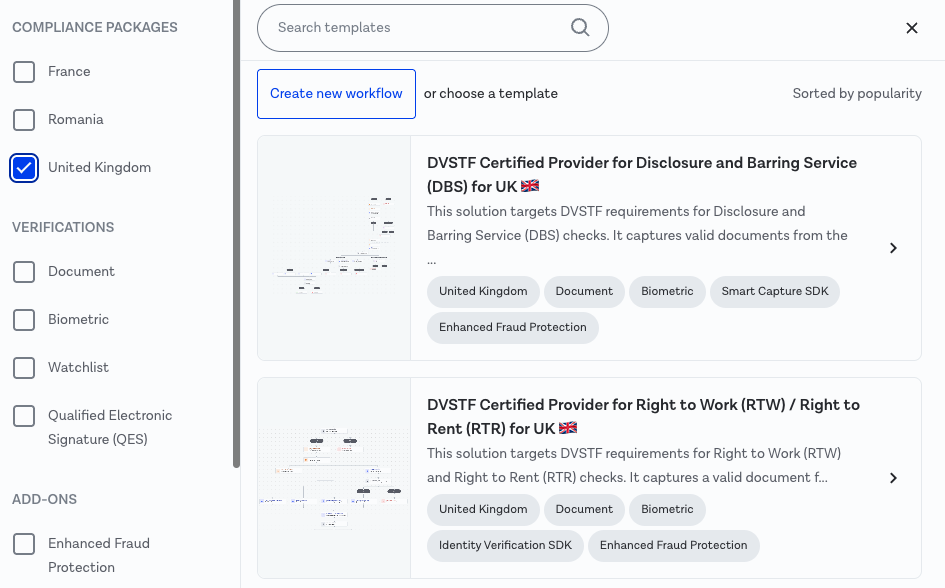
Entrust's solution is delivered through Workflow Studio. Pre-configured templates for RTW, RTR and DBS verification workflows are available and can be selected when creating a new workflow that reflects their relevant use case in the Workflow Builder.
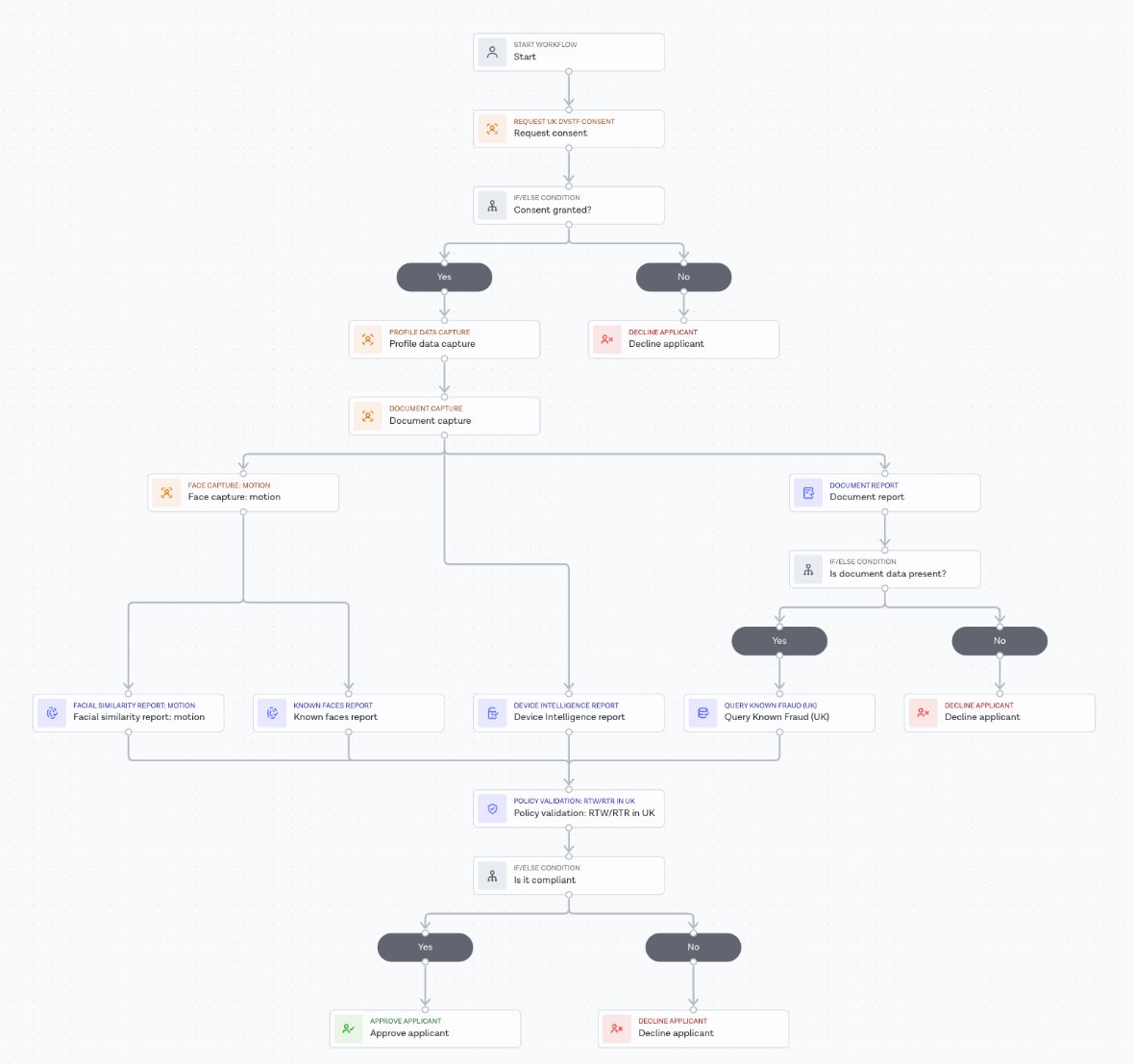
The workflow template for RTW and RTR comes with all the core Workflow Studio tasks needed for a DVSTF medium assurance verification, including:
- Request DVSTF Consent
- Profile Data Capture (optional)
- Document Capture
- Face Capture: Motion
- Document Report
- Facial Similarity Report: Motion
- Query Known Fraud
- Device Intelligence Report (optional but recommended)
- Known Faces Report (optional but recommended)
- Compliance Policy Validation
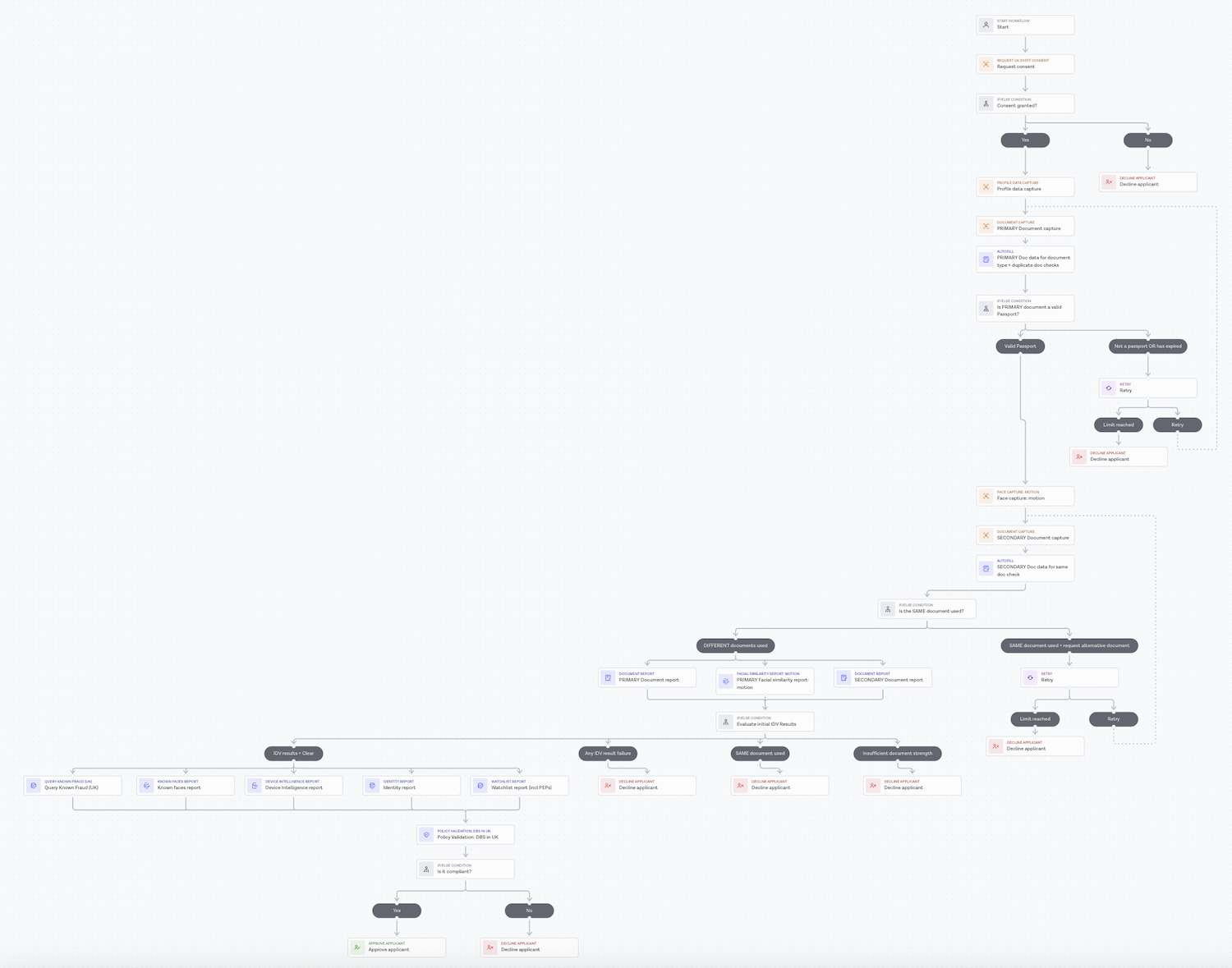
The DBS workflow template includes the core Workflow Studio tasks needed for a DVSTF higher assurance verification, including:
- Request DVSTF Consent
- Profile Data Capture (optional)
- Document Capture
- Autofill task
- Face Capture: Motion
- Document Report
- Facial Similarity Report: Motion
- Query Known Fraud
- Identity Report
- Watchlist Report
- Device Intelligence Report (optional but recommended)
- Known Faces Report (optional but recommended)
- Compliance Policy Validation
Request DVSTF Consent task
The Request DVSTF Consent step is a mandatory task within Entrust's DVSTF‑certified workflows that ensures individuals understand and explicitly agree to the digital identity verification before proceeding. When this task is triggered, the user is presented with a consent screen explaining the nature and purpose of the verification. If the end user provides consent, the workflow proceeds to the identity verification steps. If the end user declines or abandons the screen, the verification process terminates immediately and no decision is returned.
Query Known Fraud task
The Query Known Fraud task is a passive fraud‑screening step that queries a UK national fraud database and checks whether an applicant has previously been identified as a victim of confirmed fraud. This task does not alter the outcome of RTW, RTR or DBS workflows, but provides contextual intelligence to help satisfy DVSTF requirements for fraud awareness.
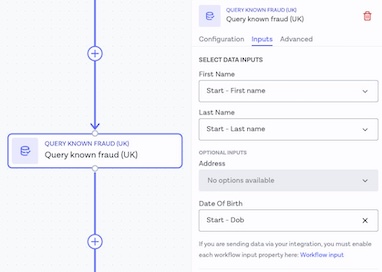
| Mandatory task input data | Optional task input data |
|---|---|
| applicant's first name | applicant's date of birth |
| applicant's last name | applicant's address |
Please note: while an applicant's date of birth and address are optional data inputs, at least one of these values must be provided for the task to run successfully.